


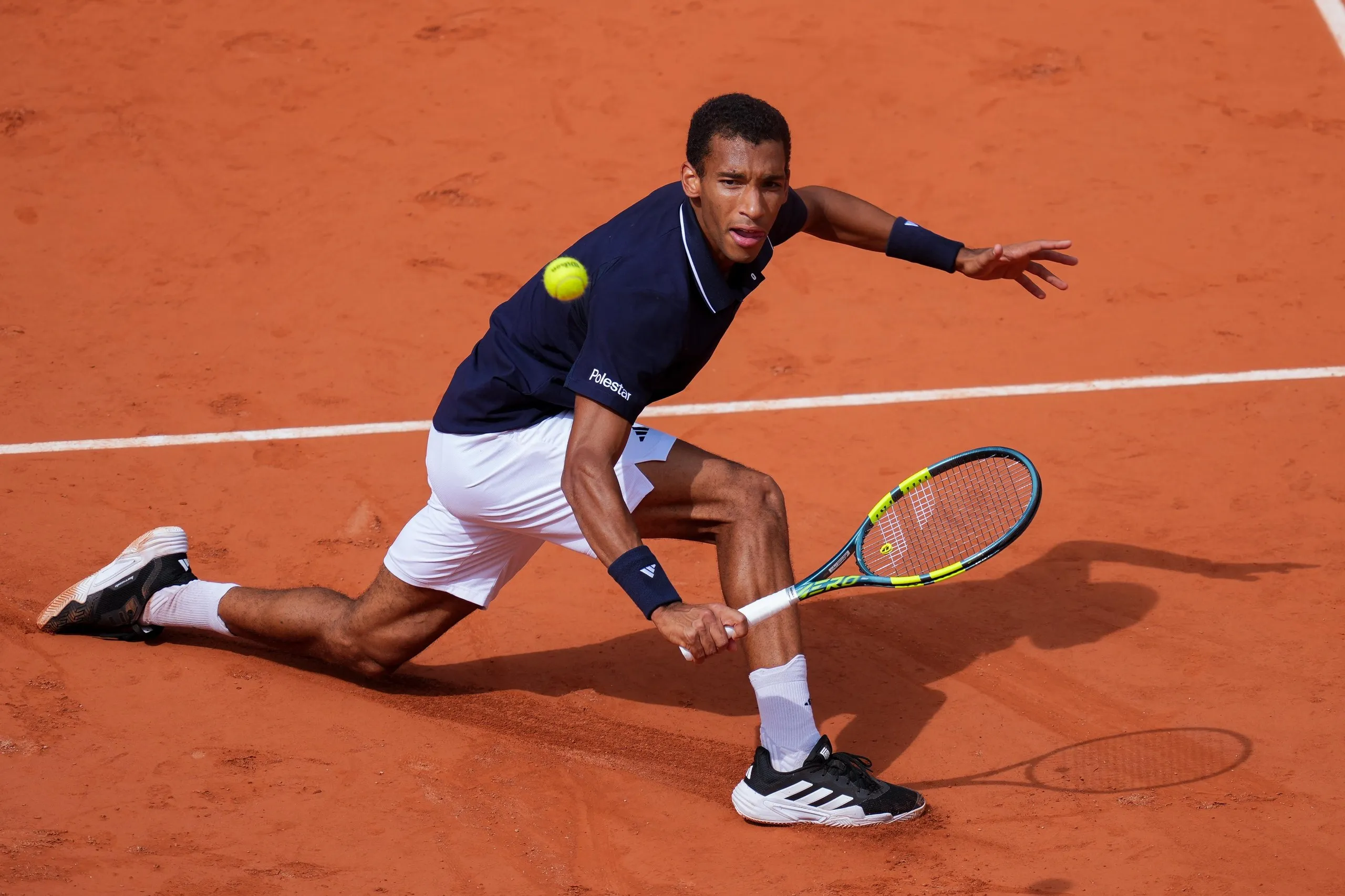
Félix Auger-Aliassime has established himself as one of the more contemplative figures on the ATP Tour. While he harbors aspirations of fulfilling his potential, the Canadian recognizes that progress often requires time and patience.
This perspective made his response to the recent defeat at the French Open particularly notable. Following his unexpected quarter-final exit against Flavio Cobolli, the fourth seed visibly struggled with the reality of having squandered a significant opportunity. Auger-Aliassime displayed a level of distress rarely seen from him in public.
“I can’t complain with my life, but I’m in a place right now with my career that it’s tough,” he expressed. “I’m destroyed a little bit. “I usually handle losses pretty well. My whole career, I was going back to training with optimism and positivity. Now I feel as if I’m not the player I want to be, so today is a difficult day.”
He further reflected on his typical mindset after losses, stating, “I usually handle losses pretty well. My whole career, I was going back to training with optimism and positivity. Now I feel as if I’m not the player I want to be, so today is a difficult day.”
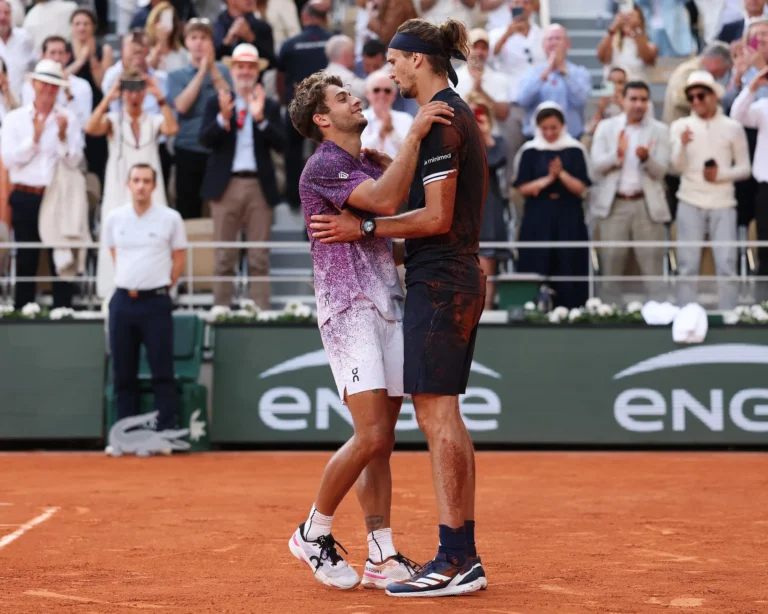
This year’s tournament in Paris unfolded as one of the most thrilling men’s grand slam events in recent memory, with the second seed, Alexander Zverev, navigating through the chaos to secure his first major title.
In the aftermath, many leading competitors should take a hard look at their performances and recognize how they failed to position themselves alongside Zverev in the title chase. Prior to Roland Garros, Carlos Alcaraz and Jannik Sinner had collectively claimed nine consecutive grand slam titles, prompting questions about the competitiveness of the field behind them. Such concerns are now more pronounced.
Alcaraz, the reigning champion, did not compete due to injury, while Sinner was eliminated in the second round. Most other top contenders were also notably absent. Zverev faced just one top-20 player, Cobolli (ranked No. 14), in his path to the final.
The extent of the upheaval in the tournament was remarkable. Sinner had entered as the strongest favorite this century (excluding Rafael Nadal in 2009) after dominating in Monte Carlo, Madrid, and Rome. However, he faltered, leading Juan Manuel Cerúndolo 6-3, 6-2, 5-1 before collapsing and losing 18 of the next 20 games.
His unexpected exit altered the tournament landscape significantly, compounded by the early departures of four players ranked in the top 12: Daniil Medvedev, Taylor Fritz, Alexander Bublik, and Jiri Lehecka. Ben Shelton, the fifth seed, also fell by the end of the day.
The following day, the veteran Novak Djokovic led the 19-year-old Brazilian João Fonseca by two sets before succumbing in a gripping five-set match.
This tournament proved advantageous for younger players, with breakthroughs for 20-year-old Jakub Mensik, 19-year-old Rafa Jodar, and Fonseca, although they may not yet be fully prepared for the pressures ahead.
The remainder of the event was characterized by high-stakes matches as those still in contention sought to capitalize on their unique opportunities. It is difficult to envision another day like Saturday, May 30, when nearly every match in the top half, freed up by Sinner’s defeat, was closely contested.
Five of the eight matches extended to five sets, including a remarkable 5hr 58min victory for Cerúndolo over Martin Landaluce, marking the longest five-set match featuring a match tie-break. Matteo Berrettini’s withdrawal from his quarter-final match against Matteo Arnaldi, followed by Arnaldi’s own withdrawal due to illness before his scheduled semi-final against Cobolli, underscored the physical toll on the competitors.
A particularly disheartening aspect of the tournament was the high number of players who did not even start, especially contemporaries of Alcaraz and Sinner, who could have made significant impacts.
Just before the tournament began, the news that 21-year-old Frenchman Arthur Fils would miss the event due to a hip injury was a substantial setback. Fils had been a standout performer in recent months, winning in Barcelona and reaching the semi-finals in Miami and Madrid. His absence deprived fans of a chance to see how he would handle the pressure of a grand slam.
Similarly, Lorenzo Musetti, 24, who had reached the semi-finals or finals of all major clay-court events the previous year, was a potential contender but has faced frequent injuries since retiring in the semi-finals of this tournament last year.
Jack Draper, also 24, found himself in a similar situation, unable to capitalize on this opportunity due to health issues. Holger Rune, 23, remains out of action following a torn Achilles tendon suffered last year. The timeline for Alcaraz’s recovery from his wrist injury remains unclear.
Amidst a backdrop of injuries, poor form, and players struggling to reach their potential, men’s tennis finds itself in a peculiar state following the second grand slam of the year. It appears the landscape will remain unchanged as Wimbledon approaches at the end of the month.
Should Sinner recover from the disappointment in Paris, he is likely to enter Wimbledon as a significant favorite. However, if he falters again, the possibilities for other players could widen considerably.